Introduction
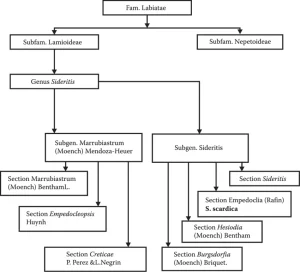
The genus Sideritis comprises around 45 species in the Turkish flora and is widely recognized for its medicinal and ethnopharmacological importance. Sideritis trojana Bornm., a perennial herb endemic to the Kazdağları (Ida Mountains) region, is traditionally consumed as an herbal tea, particularly for the relief of common cold symptoms. While previous phytochemical investigations of S. trojana have mainly reported diterpenoid constituents, its iridoid and phenolic metabolite profiles remained largely unexplored.
In continuation of our studies on bioactive secondary metabolites from the Lamiaceae family, we report here the isolation and structural characterization of 14 compounds (1–14) from the roots of S. trojana. In addition, their biological activities were evaluated, including antioxidant potential using the TEAC assay and their capacity to modulate intracellular reactive oxygen species (ROS) levels in human prostate cancer PC3 cells exposed to tert-butyl hydroperoxide (t-BOOH).
Experimental Overview
General analytical methods
A combination of spectroscopic and chromatographic techniques was employed for compound characterization. Optical rotation was measured using a JASCO DIP 1000 polarimeter, while UV and IR spectra were recorded using HP Agilent 8453 and Perkin-Elmer FT-IR systems, respectively.
NMR analyses were performed on a Bruker DRX-600 spectrometer equipped with a cryoprobe, using standard 1D and 2D experiments (COSY, HSQC, HMBC) at 300 K in CD₃OD. Mass spectrometry included ESI-MS (ion trap system) and high-resolution MALDI-TOF-MS for accurate mass determination using internal standards such as epigallocatechin gallate and glycyrrhizic acid.
Chromatographic separations were carried out using TLC, silica gel column chromatography, Sephadex LH-20, and medium-pressure liquid chromatography (MPLC) with C18 reversed-phase columns.
Plant material
Roots of S. trojana were collected in June 2010 from Bayramiç (Çanakkale, Turkey) at approximately 1700 m altitude. The species was authenticated by a taxonomist, and a voucher specimen (YEF 10002) was deposited at the Herbarium of Yeditepe University, Istanbul.
Extraction and isolation strategy
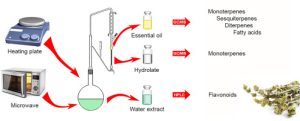
Air-dried root material was extracted with methanol under controlled heating conditions. The crude extract was concentrated and partitioned between water and chloroform to obtain polar and non-polar fractions.
The aqueous fraction was further fractionated using polyamide column chromatography followed by stepwise elution with aqueous methanol gradients. Subsequent purification was achieved through a combination of C18-MPLC, silica gel chromatography, and Sephadex LH-20, leading to the isolation of compounds 1–14, including one new iridoid glycoside (10-O-(E)-feruloylmelittoside) and several known phenylethanoid and flavonoid glycosides.
Structural characterization of compounds
Compound 1 was identified as an amorphous iridoid glycoside with molecular formula C₃₁H₄₀O₁₈, confirmed by high-resolution MALDI-TOF-MS. NMR data revealed the presence of two β-glucose units, an iridoid core, and an (E)-feruloyl moiety. HMBC correlations established glycosidic linkages and confirmed acylation at C-10, supporting its identification as 10-O-(E)-feruloylmelittoside.
The remaining compounds included melittoside derivatives, phenylethanoid glycosides such as verbascoside and isoacteoside, flavonoid glycosides, and additional iridoid-related structures, expanding the known phytochemical diversity of the genus Sideritis.
Antioxidant and biological activity assays
TEAC antioxidant evaluation
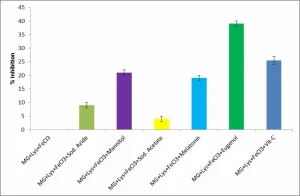
The antioxidant capacity of extracts, fractions, and isolated compounds was assessed using the Trolox Equivalent Antioxidant Capacity (TEAC) assay based on ABTS•⁺ radical scavenging. The aqueous extract showed stronger antioxidant activity than the chloroform fraction.
Overall, phenylethanoid and flavonoid glycosides exhibited higher antioxidant activity compared to iridoid glycosides. Flavonoid derivatives demonstrated moderate activity comparable to reference standards such as quercetin and quercetin-3-O-glucoside.
Cytotoxicity evaluation (MTT assay)
Selected phenylethanoid and flavonoid glycosides (6–13) were tested for cytotoxic effects on PC3 prostate cancer cells. Across concentrations ranging from 1 to 50 μM, most compounds showed no significant cytotoxicity. Only compound 6 exhibited moderate activity with an IC₅₀ value of 42.5 μM.
ROS modulation in PC3 cells
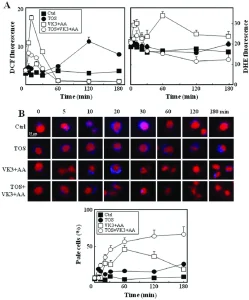
The effect of compounds on intracellular oxidative stress was evaluated using DCF fluorescence in PC3 cells. Treatment with t-BOOH significantly increased ROS production, while antioxidant NAC markedly reduced it.
Pretreatment with compounds 7 and 11 (10 μM) significantly attenuated t-BOOH-induced ROS accumulation, indicating potential intracellular antioxidant activity. Other tested compounds did not show significant effects on ROS levels under the experimental conditions.
Results and discussion
Phytochemical investigation of S. trojana roots led to the identification of a diverse set of iridoid, phenylethanoid, and flavonoid glycosides, including one newly characterized iridoid derivative. The presence of these metabolite classes further supports chemotaxonomic relationships within Lamiaceae, particularly between Sideritis and related genera such as Stachys.
Phenylethanoid glycosides were found to be the major contributors to antioxidant activity, consistent with their known redox-modulating properties. Iridoids showed comparatively weaker activity, whereas flavonoid glycosides exhibited moderate but significant radical-scavenging effects.
Biological assays further demonstrated that selected compounds can modulate oxidative stress in cancer cell models without inducing strong cytotoxicity, suggesting potential protective rather than antiproliferative roles.
Conclusion
This study expands the phytochemical profile of Sideritis trojana by reporting a new iridoid glycoside alongside multiple phenolic metabolites. The results highlight the antioxidant potential of phenylethanoid and flavonoid glycosides and provide additional insight into their biological effects in cellular oxidative stress models.