Introduction
Tomato (Solanum lycopersicum L.) is one of the most widely cultivated vegetable crops in the world. It is also an important model plant in the Solanaceae family due to several key biological advantages, including a short life cycle, diploid genome, efficient transformation systems, and the availability of a fully sequenced genome.
In recent years, global demand for tomato has increased significantly. This is driven by its wide use in fresh consumption, processed foods, sauces, and nutritional products. At the same time, climate change and population growth are putting pressure on agricultural systems, making it essential to develop high-yielding, stress-tolerant, and nutritionally improved tomato varieties.
However, traditional tomato breeding faces a major limitation: narrow genetic diversity in cultivated varieties. This restricts the ability to improve traits such as yield, disease resistance, and stress tolerance.
Wild relatives like Solanum pimpinellifolium offer useful genetic variation, but their use in breeding programs is not always practical. Introgression breeding is often slow, complex, and can disrupt the desirable genetic background of elite tomato cultivars.
Because of these challenges, mutation breeding has become a powerful alternative strategy to expand genetic diversity and accelerate crop improvement.

Why Mutation Breeding is Important in Tomato
Mutation breeding helps generate new genetic variation that may not exist naturally. Since spontaneous mutations occur very slowly, induced mutagenesis is used to speed up the process and create useful traits for breeding programs.
Key benefits include:
- Faster development of improved tomato varieties
- Creation of multiple beneficial traits in a single line
- Better adaptation to climate variability
- Expansion of genetic diversity in cultivated tomatoes
Mutagenesis has already been successfully applied in several crops such as rice, banana, and watermelon, showing its importance in modern plant breeding.
Types of Mutagenesis Used in Tomato
Tomato improvement through mutation breeding relies on several approaches, broadly grouped into chemical, physical, insertional, antisense, and genome-editing methods.
1. Chemical Mutagenesis
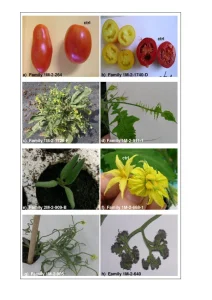
Chemical mutagenesis is one of the most widely used methods for inducing genetic variation in plants.
Ethyl Methanesulfonate (EMS)
EMS is the most commonly used chemical mutagen in tomato because it efficiently induces point mutations and small DNA changes.
In tomato breeding, EMS has been used to improve traits such as:
- Disease resistance
- Fruit quality
- Male sterility
A notable application includes developing resistance to Broomrape (Orobanche ramosa), a parasitic weed that causes major yield losses. Since no natural resistance exists, EMS-induced mutagenesis was used to generate resistant tomato lines after several generations of screening.
EMS has also been used to create resistance against plant viruses like Potato virus Y (PVY) and Tobacco etch virus (TEV) by targeting translation initiation factors such as eIF4E. Mutant lines with modified eIF4E proteins showed strong virus resistance.
Additionally, EMS-based TILLING platforms (Targeting Induced Local Lesions in Genomes) have been developed in tomato to identify gene function and useful mutations for breeding.
2. Physical Mutagenesis
Physical mutagenesis uses radiation or particles to induce DNA changes.
Gamma Rays and Fast Neutrons
Gamma irradiation has been widely used to generate large mutant populations in tomato. For example, thousands of mutants have been produced in the Micro-Tom tomato model, leading to the identification of traits like fruit sugar content (Brix levels) and plant architecture changes.
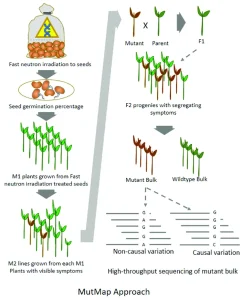
Fast neutron mutagenesis is another powerful method that causes large deletions and chromosomal rearrangements, making it useful for gene discovery.
However, physical mutagenesis requires specialized equipment and safety conditions, which limits its widespread use compared to chemical methods.
3. Insertional Mutagenesis
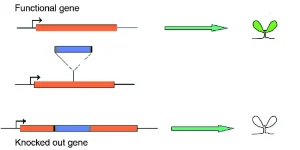
Insertional mutagenesis involves disrupting genes using DNA elements such as:
- T-DNA
- Transposons
- Retrotransposons
This method allows researchers to identify gene function by observing what happens when a gene is disrupted.
In tomato, insertional mutagenesis has been used to study genes involved in:
- Fruit ripening
- Pigmentation
- Metabolism
For example, disruption of the polygalacturonase (PG) gene significantly reduced fruit softening, improving shelf life. This approach is also useful for creating non-transgenic mutant lines with desirable traits.
4. Antisense and RNA-Based Gene Silencing
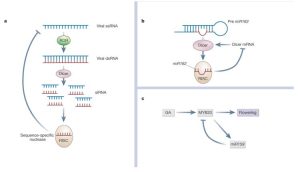
Antisense technology is used to reduce or “silence” gene expression to study gene function.
Three main approaches are used:
- Antisense RNA binding
- Ribozymes
- RNA interference (RNAi)
In tomato, antisense technology has been widely applied to study genes involved in:
- Leaf development
- Fruit ripening
- Texture and shelf life
For example, silencing of the SlIAA9 gene affected leaf shape and fruit development, confirming its role in plant morphology.
Another important target is the polygalacturonase (PL) gene, which is involved in fruit softening. RNAi suppression of this gene improved fruit firmness and shelf life without affecting taste or yield, making it highly valuable for post-harvest improvement.
5. Genome Editing Approaches
Modern tomato breeding increasingly relies on precise genome editing technologies that allow targeted modification of genes.
Genome Editing Tools
- Zinc Finger Nucleases (ZFNs)
- TALENs
- CRISPR/Cas9 system
These tools allow highly specific DNA modifications, making them much more efficient than traditional mutagenesis.
Zinc Finger Nucleases (ZFNs)
ZFNs were among the first genome editing tools used in tomato. They create targeted DNA breaks that are repaired by the plant, leading to mutations such as insertions or deletions. However, ZFNs are now less commonly used due to newer technologies.
TALENs
TALENs have been successfully used in tomato to modify genes involved in hormone signaling, such as the DELLA protein (PROCERA gene). Mutations in this gene led to:
- Taller plants
- Longer internodes
- Altered leaf shape
These traits helped researchers better understand growth regulation in tomato.
CRISPR/Cas9
CRISPR/Cas9 is currently the most powerful and widely used genome editing tool in tomato research.
It has been used to modify genes such as:
- SlAGO7, affecting leaf development
- Genes involved in anthocyanin production (pigment synthesis)
CRISPR mutants have helped identify key transcription factors involved in stress response and pigmentation, making it a critical tool for modern tomato improvement.
6. Mutation Mapping and Gene Identification
Once mutants are generated, the next challenge is identifying the exact gene responsible for the trait.
MutMap Approach
MutMap uses next-generation sequencing to identify mutations responsible for specific traits. It has been successfully used in tomato to map genes controlling important agronomic traits within a short time and low cost.
Whole Genome Sequencing (WGS)
WGS allows researchers to identify thousands of SNPs and DNA variations across tomato genomes. This approach provides a powerful resource for reverse genetics and trait discovery.
MutChromSeq
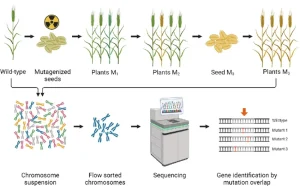
MutChromSeq isolates specific chromosomes before sequencing, making gene identification faster. Although widely used in wheat and barley, it has not yet been widely applied in tomato but holds strong potential.
7. Tomato Mutant Resources
Several public mutant databases are available for tomato research:
- Genes That Make Tomatoes (M82 mutants)
- LycoTILL (Red Setter population)
- TOMATOMA (Micro-Tom mutants)
These resources provide thousands of characterized mutants used for functional genomics and breeding studies.
8. Challenges in Tomato Mutation Breeding
Despite major progress, several challenges still limit mutation breeding in tomato:
- Limited genetic diversity in cultivated varieties
- Difficulty in linking mutations to specific genes
- Long generation time for some studies
- Complex and time-consuming transformation processes
- Lack of efficient natural transposon systems
These limitations highlight the need for combining traditional mutagenesis, genome editing, and sequencing technologies for faster improvement.
Conclusion
Mutation breeding in tomato has evolved from traditional chemical and physical mutagenesis to highly precise genome editing tools like CRISPR/Cas9. These approaches have significantly improved our ability to develop tomato varieties with better yield, disease resistance, and stress tolerance.
With expanding genomic resources and decreasing sequencing costs, mutation breeding is expected to play an even greater role in future tomato improvement and sustainable agriculture.