Introduction to Plant-Based Anti-Infective Drug Discovery
The rapid increase in antimicrobial resistance (AMR) has become a major global public health challenge. As resistant bacterial, fungal, and parasitic infections continue to spread, there is an urgent demand for innovative anti-infective therapies capable of overcoming traditional resistance mechanisms. Modern infection control strategies are therefore shifting toward the discovery of new antimicrobial agents with novel mechanisms of action, as well as therapeutic compounds that reduce microbial virulence rather than directly killing pathogens.
One promising solution involves the use of plant natural products and plant secondary metabolites. These bioactive compounds are increasingly recognized as valuable sources of next-generation anti-infective drugs, antibiotic adjuvants, and anti-virulence agents. Unlike conventional antibiotics, many plant-derived compounds interfere with pathogen communication systems, toxin production, biofilm formation, and host colonization processes. Such approaches may reduce selective pressure for resistance development while improving the effectiveness of existing antimicrobial therapies.
Plant Secondary Metabolites as Sources of Bioactive Compounds
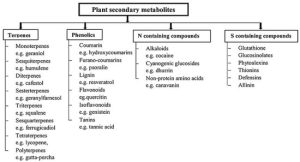
Plants naturally produce thousands of unique chemical compounds as part of their defense systems against microbes, insects, environmental stress, and competing organisms. These molecules, commonly known as plant secondary metabolites or natural products, form highly diverse chemical libraries with enormous pharmaceutical potential.
Plant tissues contain a wide range of biologically active compounds including:
- Alkaloids
- Flavonoids
- Terpenoids
- Phenolics
- Tannins
- Quinones
- Glycosides
- Polyphenols
This exceptional chemical diversity makes plant metabolites highly attractive for drug discovery programs. Compared with many synthetic small-molecule libraries, plant-derived compounds often possess more complex and biologically relevant chemical structures. In addition, many natural products resemble endogenous metabolites, allowing improved interaction with biological transport systems and cellular targets.
Over recent decades, pharmaceutical screening programs have increasingly focused on simplified synthetic compounds. Although synthetic chemistry has generated important therapeutic agents, infectious diseases frequently require structurally complex molecules capable of interacting with multiple biological pathways simultaneously. Plant natural products provide this level of structural complexity naturally.
Antimicrobial and Anti-Virulence Activities of Plant Natural Products
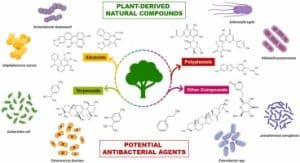
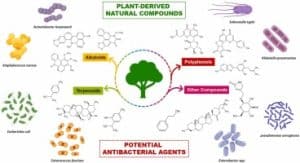
Many plant-derived compounds have demonstrated antimicrobial activity against clinically important pathogens. While some plant metabolites may show lower direct bactericidal potency than microbial antibiotics, several compounds exhibit strong anti-virulence and resistance-modifying properties.
For example, acylphloroglucinols isolated from Hypericum species have shown inhibitory activity against methicillin-resistant Methicillin-resistant Staphylococcus aureus (MRSA). Similarly, epigallocatechin gallate (EGCG), a major catechin present in green tea, has demonstrated anti-virulence activity against Streptococcus pneumoniae infection by reducing pathogenicity without directly killing the bacteria.
Another important example is hamamelitannin, a tannin compound extracted from Hamamelis virginiana. This compound has been investigated for its ability to enhance the activity of Vancomycin in biofilm-associated MRSA infections.
Researchers have also identified plant-derived molecules capable of targeting bacterial secretion systems and virulence machinery. Compounds related to 8-hydroxyquinoline from Centaurea diffusa were found to inhibit type III secretion systems in Pseudomonas aeruginosa infection, thereby impairing bacterial virulence and pathogenicity.
These discoveries demonstrate that plant natural products can function not only as antimicrobial agents, but also as resistance modulators and virulence inhibitors that improve infection management.
Ethnobotany and Traditional Medicine in Drug Discovery
Ethnobotany, the scientific study of how humans use plants in traditional medicine, plays a critical role in identifying promising medicinal species for pharmaceutical research. Traditional healing systems developed over centuries have documented thousands of plant species used to treat infectious diseases, inflammation, wounds, fever, and parasitic infections.
Globally, more than 28,000 plant species are reported to have medicinal uses in traditional healthcare systems. However, only a small percentage of these species have undergone comprehensive pharmacological and phytochemical investigation.
One of the most successful examples of ethnobotanical drug discovery is artemisinin, the highly effective antimalarial compound isolated from Artemisia annua. Guided by traditional Chinese medicine, researchers identified this plant as a source of potent antimalarial activity against Malaria. Artemisinin later became one of the most important antimalarial drugs worldwide.
This example highlights how traditional medicinal knowledge can accelerate the identification of bioactive plant compounds with strong therapeutic value.
Extraction and Isolation of Plant Natural Products
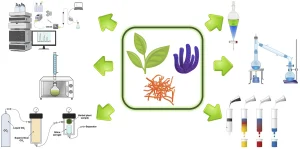
The discovery of plant-derived therapeutics requires efficient extraction and purification methods. Plant materials are first collected, dried, and processed before undergoing chemical extraction using solvents such as ethanol, methanol, water, acetone, or ethyl acetate.
Following extraction, researchers use bioassay-guided fractionation to isolate active compounds. This process involves repeated chromatographic separation combined with biological activity testing to identify fractions with antimicrobial or anti-virulence properties.
Several chromatographic techniques are commonly used, including:
- High-performance liquid chromatography (HPLC)
- Thin-layer chromatography (TLC)
- Flash chromatography
- Gas chromatography (GC)
- Liquid chromatography–mass spectrometry (LC-MS)
One major advantage of plant-based drug discovery is the scalability of natural product production. Large quantities of bioactive compounds can often be obtained simply by processing larger amounts of plant material.
Synergistic Effects Between Plant Compounds
Plant extracts frequently contain multiple bioactive metabolites that work synergistically to enhance therapeutic activity. Such synergistic interactions may increase antimicrobial efficacy, improve bioavailability, and reduce the probability of resistance development.
The interaction between artemisinin and other compounds naturally present in Artemisia annua provides a strong example of this phenomenon. Studies have shown that whole-plant preparations may outperform purified artemisinin alone by improving drug absorption and delaying resistance development.
Another example involves Hydrastis canadensis, where multiple flavonoids were found to enhance the antimicrobial activity of berberine. These flavonoids inhibit bacterial multidrug resistance pumps, thereby increasing intracellular accumulation of antimicrobial compounds.
Such multi-component defense systems are particularly attractive for infection control because pathogens may struggle to simultaneously develop resistance against several active mechanisms.
Metabolomics and Modern Plant Natural Product Research
Recent advances in metabolomics and analytical chemistry have transformed plant natural product discovery. Modern metabolomics enables rapid identification and characterization of bioactive compounds within highly complex plant extracts.
Technologies commonly used in metabolomics include:
- Ultra-performance liquid chromatography (UPLC)
- High-resolution mass spectrometry (HRMS)
- Liquid chromatography–mass spectrometry (LC-MS)
- Tandem mass spectrometry (MS/MS)
These technologies allow researchers to generate molecular profiles and identify metabolites based on fragmentation patterns, molecular networks, and structural similarities.
Using computational tools and molecular networking approaches, scientists can now rapidly detect novel compounds, predict chemical structures, and associate specific metabolites with biological activities such as antimicrobial action or anti-virulence effects.
Metabolomics therefore significantly accelerates the discovery of valuable plant-derived anti-infective agents while reducing the time required for traditional bioassay-guided isolation.
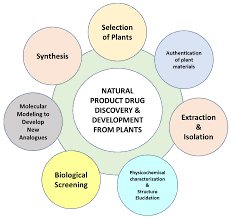
Anti-Virulence Strategies and Infection Control
One of the most promising areas of plant natural product research involves anti-virulence therapy. Instead of directly killing pathogens, anti-virulence compounds reduce the ability of microbes to cause disease.
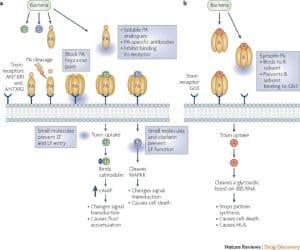
Plant-derived anti-virulence agents may target:
- Biofilm formation
- Quorum sensing
- Toxin production
- Adhesion factors
- Pili formation
- Secretion systems
- Motility mechanisms
This therapeutic strategy may reduce selective pressure for antimicrobial resistance because pathogens are not exposed to direct lethal stress.
A growing number of isolated plant compounds have demonstrated anti-virulence activity against clinically important pathogens including:
- Staphylococcus aureus infection
- Pseudomonas aeruginosa infection
- Escherichia coli infection
- Acinetobacter baumannii infection
Because only a small percentage of medicinal plant species have been chemically investigated, the potential for discovering new anti-virulence pharmacophores remains extremely high.
Future Perspectives of Plant Natural Products in Infection Control
Plant natural products represent a major opportunity for the development of next-generation anti-infective therapies. Their structural diversity, biological relevance, synergistic behavior, and compatibility with modern metabolomics technologies make them highly valuable for pharmaceutical innovation.
Future research directions include:
- Discovery of novel antimicrobial scaffolds
- Development of antibiotic adjuvants
- Identification of anti-biofilm compounds
- Exploration of synergistic plant metabolite mixtures
- Engineering of therapeutic phytochemicals using biotechnology
- Application of metabolomics and artificial intelligence in drug discovery
In addition, advances in plant biotechnology, metabolic engineering, and bioreactor production systems are improving the large-scale production and optimization of therapeutic plant compounds.
Conclusion
Plant natural products offer enormous potential for combating antimicrobial resistance and improving global infection control strategies. Their chemical diversity, anti-virulence activities, synergistic interactions, and compatibility with modern analytical technologies position them as valuable resources for anti-infective drug discovery.
Despite significant progress, the majority of medicinal plants remain chemically unexplored. Continued investigation of plant secondary metabolites, combined with metabolomics, ethnobotany, and biotechnology, is expected to accelerate the discovery of novel antimicrobial agents and therapeutic compounds capable of addressing the growing challenge of drug-resistant infections.