Introduction to Plant Phenotypic Plasticity and Climate Change
Climate change is continuously transforming environmental conditions across the globe, affecting temperature, rainfall patterns, atmospheric carbon dioxide levels, and ecosystem stability. Plants, as sessile organisms, cannot escape these environmental shifts. Instead, they rely on adaptive biological mechanisms to survive and maintain growth under changing climatic conditions. One of the most important survival strategies is plant phenotypic plasticity.
Phenotypic plasticity refers to the ability of a plant to modify its growth, development, physiology, and metabolism in response to environmental changes without altering its genetic code. This adaptive flexibility enables plants to respond to stresses such as drought, heat, salinity, flooding, nutrient deficiency, and elevated CO₂ concentrations. Modern plant biology now recognizes phenotypic plasticity as a genetically regulated and heritable process that plays a major role in plant adaptation, evolution, ecosystem stability, and agricultural productivity.
The study of plant plasticity has become increasingly important because climate change is progressing rapidly. Understanding how plants respond to environmental stress is essential for predicting future species distribution, improving crop resilience, protecting biodiversity, and maintaining food security.

How Plants Adapt to Climate Change
Plants generally respond to climate change through three main strategies:
- Phenotypic plasticity
- Genetic adaptation through natural selection
- Migration toward favorable environments
These strategies often work together rather than independently. Among them, phenotypic plasticity provides the fastest response because plants can immediately adjust their physiological and developmental processes according to environmental signals.
Examples of plant plastic responses include:
- Changes in flowering time
- Modification of leaf size and lifespan
- Altered seed dormancy and germination
- Root system remodeling
- Adjustment of photosynthesis and respiration rates
- Water-use efficiency regulation
These responses allow plants to survive short-term environmental fluctuations while also supporting long-term evolutionary adaptation.
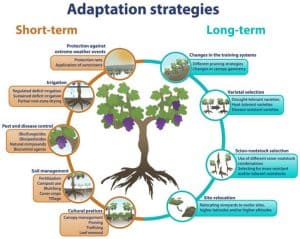
Genetic and Molecular Basis of Phenotypic Plasticity
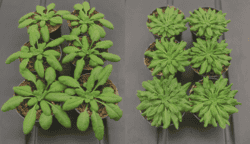
Phenotypic plasticity is controlled by complex molecular and genetic mechanisms. Environmental signals such as temperature, light intensity, water availability, and nutrient levels activate signaling pathways inside plant cells. These pathways regulate gene expression, hormonal balance, and developmental programs.
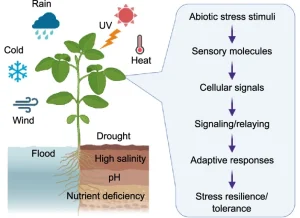
Environmental Signal Perception
Plants possess specialized molecular sensors that detect environmental changes. These include:
- Temperature-sensitive proteins
- Light receptors
- Drought-responsive signaling pathways
- Nutrient sensing systems
- Stress-responsive transcription factors
Once activated, these systems regulate downstream genes responsible for adaptive responses.
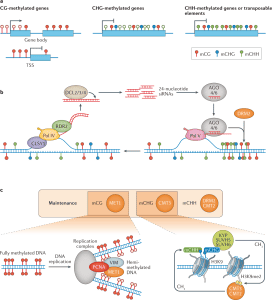
Role of Epigenetics in Plant Plasticity
Epigenetic regulation is one of the most important mechanisms involved in phenotypic plasticity. Epigenetics refers to heritable changes in gene activity without modification of the DNA sequence itself.
Epigenetic mechanisms include:
- DNA methylation
- Histone modification
- Chromatin remodeling
- RNA-mediated gene silencing
These processes allow plants to rapidly activate or suppress stress-response genes under changing environmental conditions.
For example, prolonged exposure to cold temperatures can trigger epigenetic silencing of flowering repressors, allowing plants to flower at the correct seasonal period. Such mechanisms are crucial for plant survival under fluctuating climates.
Plasticity in Flowering Time and Plant Phenology
One of the most visible effects of climate change is the alteration of plant phenology, especially flowering time and leaf emergence.
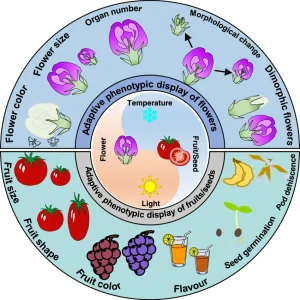
Climate-Induced Changes in Flowering
Many plant species now flower earlier due to increasing global temperatures. Studies have shown that most observed plant species exhibit earlier spring flowering compared to previous decades.
Flowering time plasticity is critical because reproduction must remain synchronized with:
- Pollinator activity
- Seasonal rainfall
- Temperature conditions
- Seed development periods
If climate signals become unreliable, plants may flower at inappropriate times, reducing reproductive success and survival.
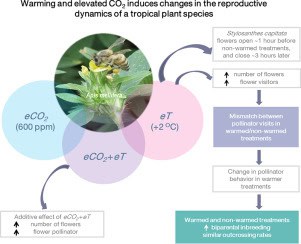
Vernalization and Flowering Regulation
In several species, flowering is regulated by vernalization, a process where prolonged cold exposure triggers flowering competence.
In model plants like Arabidopsis, flowering regulation involves genes such as:
- FLC (FLOWERING LOCUS C)
- VIN3
- VRN genes in cereals
These genes respond to environmental temperature through epigenetic regulation, demonstrating the direct connection between climate signals and developmental plasticity.
Plasticity in Leaf Traits and Photosynthesis
Leaf functional traits are highly responsive to climate conditions and strongly influence plant productivity.
Plastic Leaf Traits
Plants can modify:
- Leaf lifespan
- Leaf thickness
- Leaf area
- Chlorophyll concentration
- Stomatal density
- Photosynthetic capacity
These changes help optimize energy capture, water conservation, and carbon fixation under stressful environments.
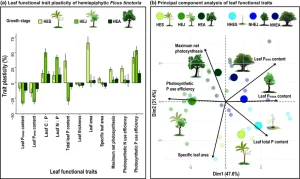
Elevated CO₂ and Photosynthetic Adjustment
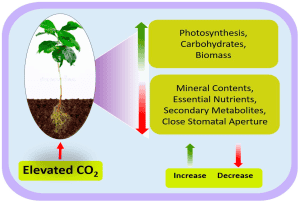
Higher atmospheric CO₂ concentrations can stimulate photosynthesis in many plant species. However, plants also adjust respiration and metabolic activity in response to increased temperatures and drought stress.
Plastic responses in photosynthesis and respiration can significantly affect:
- Plant growth rates
- Biomass accumulation
- Carbon sequestration
- Ecosystem carbon balance
These physiological adjustments are especially important for predicting global vegetation responses to climate change.
Seed Plasticity and Climate Adaptation
Seeds represent a highly sensitive stage in the plant life cycle. Climate conditions during seed development strongly influence future germination success and seedling survival.
Climate Effects on Seed Traits
Environmental stress can alter:
- Seed dormancy
- Seed longevity
- Germination timing
- Seed nutrient reserves
- Seedling vigor
For example:
- Higher temperatures may reduce dormancy
- Drought stress can accelerate germination responses
- Elevated CO₂ may modify seed provisioning
Changes in these traits directly impact plant regeneration and population persistence under future climate scenarios.
Adaptive vs Non-Adaptive Plasticity
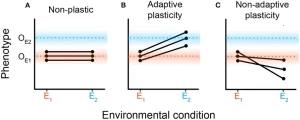
Not all plastic responses are beneficial. Scientists distinguish between:
Adaptive Plasticity
Adaptive plasticity improves plant fitness and survival under stressful conditions.
Examples include:
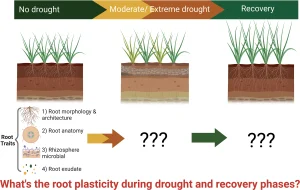
- Deeper roots during drought
- Earlier flowering under warming climates
- Increased water-use efficiency
Non-Adaptive Plasticity
Some responses occur as unavoidable physiological consequences and may reduce plant performance.
Examples include:
- Premature flowering caused by unreliable temperature cues
- Reduced seed viability under heat stress
- Delayed dormancy release
Understanding the difference between adaptive and non-adaptive plasticity is essential for predicting plant resilience to climate change.
Plant Functional Traits and Climate Resilience
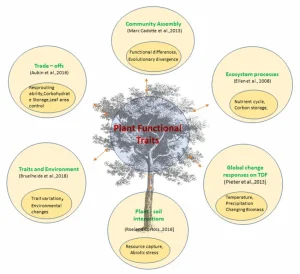
Plant functional traits are measurable characteristics that influence plant growth, reproduction, and ecosystem function.
Important functional traits include:
- Seed size
- Plant height
- Root architecture
- Leaf mass per area
- Water-use efficiency
- Nitrogen fixation capacity
These traits are widely used in ecological and climate models to predict vegetation dynamics and species distribution under future climates.
Researchers now prioritize studying plasticity in these functional traits because they strongly influence plant adaptation capacity.
Phenotypic Plasticity and Species Distribution
Climate change is already shifting the geographic distribution of many plant species.
Observed effects include:
- Poleward migration
- Altitudinal shifts
- Expansion into new habitats
- Local extinction at trailing range edges
Phenotypic plasticity helps plants tolerate new environments during migration and may reduce extinction risk.
Species Distribution Models
Modern ecological models increasingly integrate plant plasticity to improve predictions of:
- Habitat suitability
- Vegetation transitions
- Ecosystem productivity
- Biodiversity conservation
Mechanistic models that include physiological plasticity provide more accurate predictions than models based only on current species distributions.
Plasticity in Agricultural Crops
Phenotypic plasticity is becoming increasingly important in modern agriculture because crops must cope with:
- Heat stress
- Water scarcity
- Soil salinity
- Unpredictable rainfall
- Elevated CO₂
Breeding Climate-Resilient Crops
Traditional crop breeding mainly focused on maximizing yield under stable conditions. However, future breeding programs increasingly aim to develop crops with enhanced plasticity and environmental resilience.
Target traits include:
- Drought-responsive root systems
- Flexible flowering time
- Improved water-use efficiency
- Heat tolerance
- Stress-responsive metabolism
Understanding the genetic basis of plasticity can support the development of climate-smart agriculture.
Role of Epigenetics in Future Crop Improvement
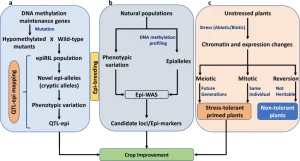
Epigenetic modifications can occur faster than DNA mutations, making them highly valuable for rapid environmental adaptation.
Future plant breeding strategies may use:
- Epigenetic markers
- Stress memory mechanisms
- Genome-wide epigenetic profiling
- Environment-responsive gene regulation
These approaches may help create crops capable of maintaining productivity under rapidly changing environmental conditions.
Importance of Interdisciplinary Research
The study of plant phenotypic plasticity combines several scientific fields, including:
- Plant physiology
- Molecular biology
- Genetics
- Ecology
- Evolutionary biology
- Climate science
- Crop science
Interdisciplinary collaboration is essential for understanding how plants respond to climate change at molecular, organismal, ecosystem, and agricultural levels.
Conclusion
Plant phenotypic plasticity is one of the most important biological mechanisms supporting plant survival under climate change. Through flexible adjustments in growth, flowering, metabolism, seed traits, and physiology, plants can tolerate rapidly changing environmental conditions and improve their chances of long-term adaptation.
Advances in molecular biology, epigenetics, genomics, and ecological modeling are providing deeper insight into the mechanisms controlling plastic responses. These discoveries are highly valuable for biodiversity conservation, ecosystem management, and the development of climate-resilient crops.
As climate change intensifies, understanding and utilizing plant phenotypic plasticity will become increasingly important for maintaining sustainable agriculture, protecting natural ecosystems, and ensuring future global food security.