Introduction to Common Bean Genetic Diversity
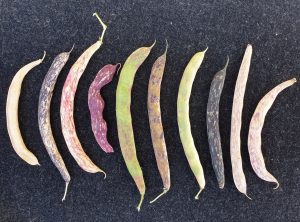
Common bean is one of the most important legume crops cultivated worldwide. This annual diploid species (2n = 2x = 22) originated in the Americas and is now extensively grown in tropical, subtropical, and temperate agricultural systems. Dry bean production is especially significant in Latin America and eastern Africa, regions that contribute a major share of global bean cultivation.
The broad ecological adaptation of common bean has generated remarkable phenotypic and genetic variability. Differences are observed in plant architecture, seed morphology, flowering time, photoperiod sensitivity, physiological adaptation, and environmental tolerance. Because of this extensive diversity, the domestication history and genetic relationships among cultivated bean varieties remained unclear for many years. In several cases, bean genotypes with similar morphology were not genetically related, while highly distinct cultivars sometimes shared close genetic backgrounds.
Domestication and Gene Pools of Common Bean
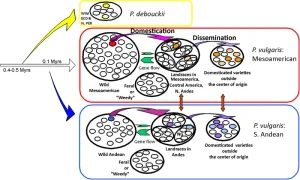
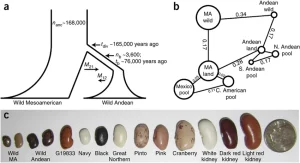
Molecular and biochemical studies using seed proteins and isozyme markers demonstrated that common bean underwent two independent domestication events. One domestication center was located in Middle America, while the second originated in the southern Andes. These domestication processes produced two genetically distinct gene pools:
- Middle American gene pool
- Andean gene pool
Further investigations classified these gene pools into several races based on morphological, ecological, and biochemical variation. The existence of these separate domestication centers explains much of the genetic structure observed in cultivated and wild bean populations.
Objective of the RFLP Study
This study extended previous biochemical analyses by investigating Restriction Fragment Length Polymorphism (RFLP) diversity in common bean populations. The research focused on evaluating:
- Levels of genomic polymorphism
- Geographic distribution of genetic variation
- Relationships between cultivated and wild bean accessions
- Divergence between Middle American and Andean gene pools
A total of 85 bean accessions, including cultivated varieties and wild relatives, were analyzed using homologous DNA probes. The results confirmed strong genetic differentiation between the two major domestication groups.
Plant Materials and Germplasm Collection
The study examined 85 accessions of Phaseolus vulgaris selected to represent the widest possible genetic diversity.
Cultivated Accessions
The cultivated bean collection included:
- 36 genotypes from the Middle American gene pool
- 26 genotypes from the Andean gene pool
The Middle American accessions represented the races:
- Jalisco
- Durango
- Mesoamerica
The Andean group included representatives from:
- Nueva Granada
- Chile
- Peru
Wild Bean Accessions
Twenty-two wild bean accessions were also included in the analysis. Half originated from Middle America and the other half from the Andes. These wild populations provided important information about ancestral genetic diversity and domestication patterns.
RFLP Methodology and Molecular Analysis
DNA Extraction and Restriction Digestion
Young leaf tissues from greenhouse-grown plants were collected and frozen before DNA extraction. Genomic DNA samples were digested using three restriction enzymes:
- EcoRI
- EcoRV
- HindIII
These enzymes were selected because they previously showed high levels of polymorphism detection in common bean genomes.
DNA Probes Used in the Study
The RFLP analysis used 12 probes:
- Ten low-copy genomic clones
- Two functional genes:
- Chalcone isomerase (CHI)
- Chalcone synthase (CHS)
Several probes were associated with specific linkage groups in the bean genome, allowing researchers to analyze multiple genomic regions simultaneously.
Southern Hybridization Procedure
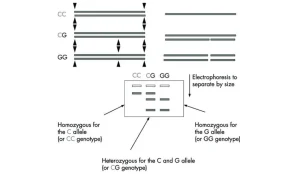
DNA fragments were transferred to membranes and hybridized with radioactive labeled probes using Southern blot techniques. Autoradiography was then used to visualize restriction fragment patterns and detect polymorphisms among bean accessions.
RFLP Polymorphism and Genetic Variation
High Levels of Genomic Polymorphism
The study revealed substantial RFLP diversity across common bean populations. Approximately 70% of all probe-enzyme combinations showed polymorphism.
The Middle American gene pool displayed slightly higher polymorphism levels than the Andean group:
- Middle American polymorphism: 76%
- Andean polymorphism: 63%
Among the restriction enzymes tested, EcoRV generated the highest level of polymorphism detection.
Multiple Band Patterns
Several probes produced multiple DNA bands during hybridization. These patterns were likely caused by:
- Gene duplication events
- Multiple restriction sites within homologous genomic regions
For example, the chalcone synthase gene family was identified as a multigene family with multiple genomic copies.
Genetic Relationships Between Bean Populations
Divergence Between Major Gene Pools
Cluster analysis and genetic distance calculations clearly separated common bean accessions into two major genetic groups:
- Middle American genotypes
- Andean genotypes
Wild and cultivated accessions from the same geographic regions generally clustered together. This result strongly supports the hypothesis of independent domestication in Middle America and the Andes.
Geographic Distribution of Genetic Diversity
Middle American accessions included materials from:
- Mexico
- Central America
- Colombia
- Brazil
Andean accessions originated mainly from:
- Peru
- Ecuador
- Chile
- Argentina
- Colombia
The geographic organization of genetic diversity reflected long-term evolutionary isolation between the two domestication centers.
Genetic Diversity and Evolutionary Implications
Evidence for Subspecific Divergence
The high genetic distances between Middle American and Andean beans suggest divergence at the subspecies level. Partial reproductive isolation between these groups also supports this conclusion.
Crosses between Middle American and Andean genotypes often exhibit hybrid weakness, indicating the presence of reproductive barriers and ongoing evolutionary divergence.
Researchers proposed that the two gene pools could eventually represent separate evolutionary lineages similar to the indica and japonica groups in rice.
Variation Within Races
Although racial classifications based on morphology and ecology exist, RFLP markers showed that variation within races remained high. Several factors may explain this observation:
- Gene flow between populations
- Independent mutations
- Convergent evolution under similar environmental pressures
For example, bean races adapted to arid environments evolved similar phenotypes despite belonging to genetically distinct gene pools.
Comparison Between RFLP and Isozyme Diversity
RFLP markers revealed significantly higher levels of genetic diversity compared with isozyme markers.
Advantages of RFLP Analysis
RFLP technology provided:
- Greater sensitivity for detecting DNA variation
- Higher resolution of genomic diversity
- Improved differentiation among closely related genotypes
The total gene diversity measured with RFLP markers was approximately two times higher than diversity estimated using isozyme analysis.
Domestication Bottleneck
Unlike seed protein markers, RFLP data did not indicate a severe reduction in diversity during bean domestication. Wild populations generally showed higher diversity, but cultivated beans still maintained substantial genomic variation.
Possible explanations include:
- Multiple domestication events
- Gene flow between wild and cultivated populations
- Neutral evolution of many RFLP loci
Importance for Bean Breeding and Germplasm Conservation
The study has major implications for crop improvement and genetic resource conservation.
Conservation Strategies
Because the Middle American and Andean gene pools are highly divergent, germplasm conservation programs should preserve genetic material from both domestication centers.
Maintaining wild bean populations is also essential because they contain valuable alleles for:
- Disease resistance
- Abiotic stress tolerance
- Adaptation to environmental changes
Applications in Plant Breeding
High RFLP diversity provides powerful molecular tools for breeding programs. RFLP markers can assist in:
- Marker-assisted selection
- Genetic mapping
- Identification of elite breeding lines
- Introgression of beneficial traits
Crosses between distinct gene pools may also generate novel genetic combinations that improve yield, adaptation, and nutritional quality.
Conclusion
RFLP analysis of Common bean demonstrated extensive genetic diversity and confirmed the existence of two major domestication centers located in Middle America and the Andes. The study revealed strong divergence between these gene pools while also identifying considerable variation within cultivated races and wild populations.
These findings significantly improved the understanding of bean evolution, domestication, and population structure. In addition, the results highlighted the importance of molecular markers for crop genetics, germplasm conservation, and modern bean breeding programs aimed at improving agricultural productivity and food security.